
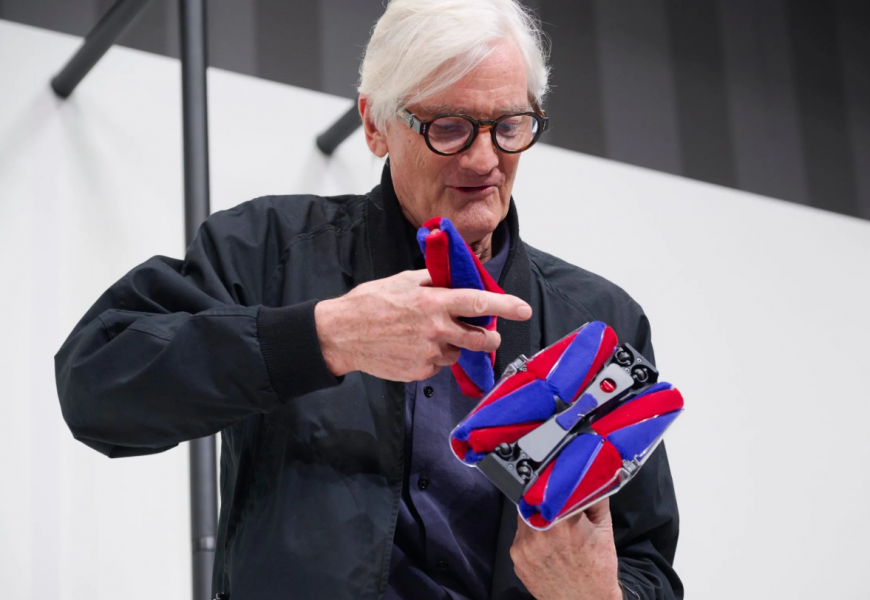
James Dyson is one of Britain’s most influential inventors and entrepreneurs. His name has become inseparable from modern product design, engineering, and the idea that everyday household objects can be radically improved through persistence and technical imagination. He is best known as the founder of Dyson and the inventor of the bagless vacuum cleaner using cyclonic separation, but his broader legacy is about much more than one product.
Born in 1947, Dyson trained in art and design before becoming one of the best-known industrial designers in the world. His background matters because his success came from combining engineering with aesthetics. Dyson products are not simply machines hidden inside plastic cases. They are designed to show function, airflow, movement, and technology. This visibility of engineering became part of the brand’s identity.
Dyson’s most famous breakthrough began with frustration. He noticed that traditional vacuum cleaners lost suction as their bags filled with dust. Instead of accepting this as a normal flaw, he began searching for a better solution. The result was cyclonic separation, a technology that uses centrifugal force to separate dust from air without relying on a conventional bag. Biographical sources identify Dyson as the inventor of the bagless vacuum cleaner based on cyclonic separation and the founder of the Dyson company.
The path to success was long and difficult. Dyson famously developed thousands of prototypes before achieving a successful design. This story has become central to his public mythology because it captures one of the key lessons of invention: innovation often looks like repeated failure before it becomes obvious success. The official Dyson biography describes Sir James Dyson as an inventor, entrepreneur, and philanthropist devoted to solving problems and developing products through new technologies.
When Dyson’s vacuum cleaners reached the market, they did more than sell well. They changed consumer expectations. A vacuum cleaner had been considered a dull household appliance, but Dyson turned it into a visible piece of technology. The transparent bin, bold design, and bagless system made the product feel modern. The company showed that even mature categories could be disrupted if someone rethought the basic engineering.
James Dyson’s business philosophy is built around problem-solving. He often emphasizes that good design starts with irritation: something does not work properly, wastes energy, breaks easily, or frustrates the user. The designer’s job is to notice that problem and refuse to accept it. This way of thinking has shaped the company’s expansion into hand dryers, fans, heaters, air purifiers, hair dryers, and other technologies.
One of the most important aspects of Dyson’s success is vertical integration of design, engineering, and brand identity. The company does not simply manufacture appliances; it sells a worldview. Dyson products suggest precision, performance, research, and technical confidence. Their high price points are justified through the language of engineering: motors, airflow, filtration, battery systems, digital control, and efficiency.
Dyson has also invested heavily in research and development. The company’s reputation depends on the idea that it is not merely styling existing products, but creating new technological solutions. This has helped Dyson become one of the most globally recognizable British technology brands. In a country often concerned about the decline of manufacturing, Dyson has been presented as an example of British innovation competing internationally.
At the same time, Dyson’s career and company have not been free from controversy. Business decisions about manufacturing, relocation, Brexit, taxation, and the company’s global structure have generated criticism. Some admire him as a patriotic inventor and industrial visionary; others question the relationship between public statements and corporate choices. This tension is common among major entrepreneurs whose influence extends beyond products into politics and national economic debates.
Dyson himself has often argued for the importance of engineering education. His concern is that countries need more engineers, designers, and technical problem-solvers. This led to initiatives such as the Dyson Institute of Engineering and Technology, which reflects his belief that education should connect theory with real-world engineering practice. For Dyson, invention is not only about individual genius; it requires systems that train people to build, test, and improve.
His design approach also reflects a particular attitude toward failure. Many companies try to hide failure, but Dyson’s public story often highlights it. The thousands of prototypes become proof of seriousness. This matters because it challenges the romantic idea that invention happens in a sudden flash. In Dyson’s narrative, invention is stubbornness, testing, adjustment, and the willingness to be wrong repeatedly.
The Dyson brand has also influenced how consumers think about appliances. Before Dyson, many household devices competed mainly on price or basic function. Dyson helped create a premium category around performance and design. A vacuum cleaner, hair dryer, or fan could become aspirational. This shift shows the power of design to transform ordinary objects into symbols of modern living.
James Dyson’s wealth and global success have made him one of Britain’s most prominent business figures. His influence is not limited to his company’s products; it extends into conversations about innovation policy, education, manufacturing, entrepreneurship, and the future of British technology. His career is often used as an example of how a single persistent idea can become a global enterprise.
In the end, James Dyson’s significance lies in his ability to see familiar problems as unfinished engineering challenges. He built a company on the belief that everyday objects could be better, and that consumers would recognize the value of better design. Whether one admires the products, questions the business choices, or debates the price, the impact is undeniable.
James Dyson changed the way people think about household technology. He made engineering visible, design commercial, and persistence part of the brand story. His career shows that innovation does not always begin with a grand abstract theory. Sometimes it begins with a vacuum cleaner that does not work well enough — and a designer who refuses to accept that as normal.